

Spider-Man's latest lesson: builders, keep building
Yes, there will be never ending obstacles to overcome but builders, real builders, always keep building
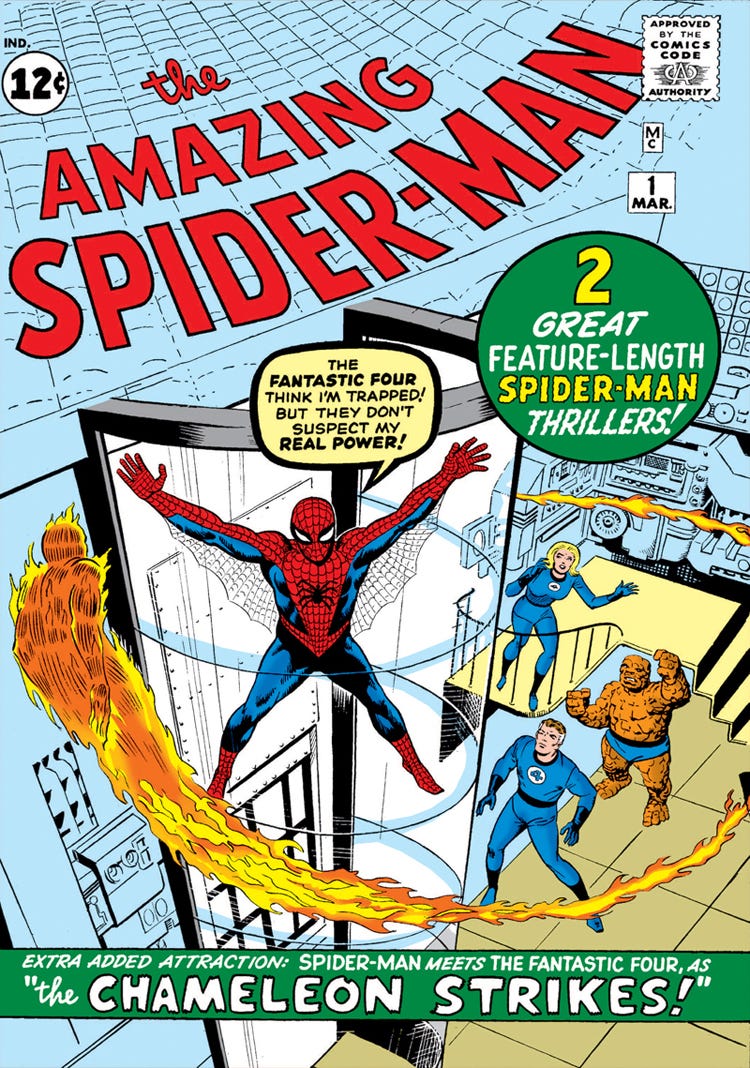
This weekend Spider-Man: Brand New Day posted the biggest opening day in box office history: $168 million, dethroning Avengers: Endgame, with $927 million worldwide in one weekend. Marvel Studios now owns the four largest openings ever recorded.
Ten years ago I wrote a bestselling case about how that became possible. The short version: Marvel nearly died. Repeatedly.
A Senate panel in 1954 blamed comics for juvenile delinquency, one psychiatrist testifying that Hitler was a beginner compared to the comic book industry. Marvel survived. A conglomerate that couldn’t tell Superman from Spider-Man bought it. Survived. Corporate raider Ron Perelman leveraged it into bankruptcy while paying himself hundreds of millions in special dividends and junk bond proceeds. Survived. Carl Icahn circled the carcass. Survived him too.
Then a toy executive named Ike Perlmutter and a turnaround CEO named Peter Cuneo rebuilt it from a company that almost missed payroll, licensing characters for scraps. Sony got Spider-Man for $10 million plus points. The first three Spider-Man films grossed about $2.5 billion; analysts estimate Marvel saw maybe $62 million. Blade grossed $131 million. Marvel’s check: $25,000.
In 2004, Hollywood veteran named David Maisel flew out to pitch Perlmutter something radical: stop licensing, build a real studio, make the movies ourselves, finance it with the characters as collateral.
Here’s the part I only learned talking to the principals during COVID. Maisel didn’t fly to some office park. He flew from LA to Mar-a-Lago, where Perlmutter holds court. And midway through the pitch that became Marvel Studios, in wandered a friendly neighborhood member wanting to say hello and talk about his upcoming reality TV show. Donald Trump, promoting The Apprentice, strolling through the founding meeting of the most successful film franchise in human history.
You cannot write this. Fiction editors would reject it as too much.
The pitch worked. $525 million in debt secured by the characters themselves, a studio above a car dealership with no free coffee, unknown actors on long contracts because the characters were the stars, and Iron Man in 2008. Disney paid $4.2 billion a year later, mostly in crisis-priced stock that made the real number closer to $10 billion. You know the rest.
Now look at this weekend’s producer credits, because nothing in this story is not odd. Avi Arad, who quit rather than watch Marvel make its own movies and sold his stock at what became one of the worst personal trades in entertainment history, still collects a credit, contractual sediment from the era his strategy built. Amy Pascal, whom Sony pushed out as studio chief a decade ago, kept Spider-Man producing rights on her way out the door; the company discarded the person, the person kept the character, and the company just had its biggest weekend ever on her film.
And Kevin Feige. Rich beyond counting, famous beyond need, twenty years and thirty-some films in, still making movies. Plenty of people with his position retired to Aruba ages ago.
Step back and consider how strange the whole timeline is. The visitor who wandered through the pitch meeting talking about his reality show went on to win the presidency in one of the great upsets in American history, lose it, then win it again. Meanwhile the character being pitched that afternoon spent those same decades resurrecting its own past, old villains, old timelines, old Peter Parkers, culminating in a movie that just broke the record its own studio set. A reality star ran the free world twice while a cartoon teenager from 1962 out-grossed everything Hollywood ever made. Fiction isn’t stranger than fact. Fiction couldn’t get this greenlit.
And notice the ground they built on, because it was never fair. Marvel created its first blue ocean, the 1960s character explosion, while DC literally owned Marvel’s distribution arm and throttled how many titles it could ship. It built its comeback while Sony owned its crown-jewel character and Fox held the X-Men, its own children licensed out for scraps, watching other studios profit from them. The platform that can strangle you, the rival that owns your best asset, the landlord who is also your competitor: that’s not the exception in building. That’s the terrain. Today’s founders building on AI platforms that might ship their product as a feature next quarter are not facing some unprecedented cruelty. They’re facing DC owning the trucks. Builders build anyway, and the ones who do inherit the record books.
But through every strange turn, one beat never changes: builders build. Not because they need to. Musk sleeps on factory floors he could buy and demolish on a whim. Buffett is still reading filings and trading in his tenth decade. Gates invests in technology companies while holding more money than some countries. None of them has needed a paycheck in living memory. The engine doesn’t ask about need. It’s the same engine that had Feige on set this year, thirty-odd films past the point where anyone would have blamed him for a beach.
Stan Lee wrote the reason into the character himself, the most famous line in comics: with great power comes great responsibility. Everyone quotes it about power. Almost nobody notices what the responsibility is. It’s not to hold the power, guard it, or retire on it. It’s to use it. To build.
That’s the actual lesson under the box office records. Arad had maximum position and traded it away because his judgment said the plan would fail. Feige had judgment, barely any position, and stayed, and built, and kept building through every year people asked when the fad would end. Position is what you hold. Building is what you do. The cap table forgot who was right. The credits never do.
Presidents change, twice over in this story. Owners change, raiders come and go, strategies get abandoned by the people who most opposed and most profited from them. The builders just keep building. Everything else is weather.
As the late, great Stan Lee said, closing every comic book: Excelsior.
Builders, ONWARD!